Stable Isotope Analysis
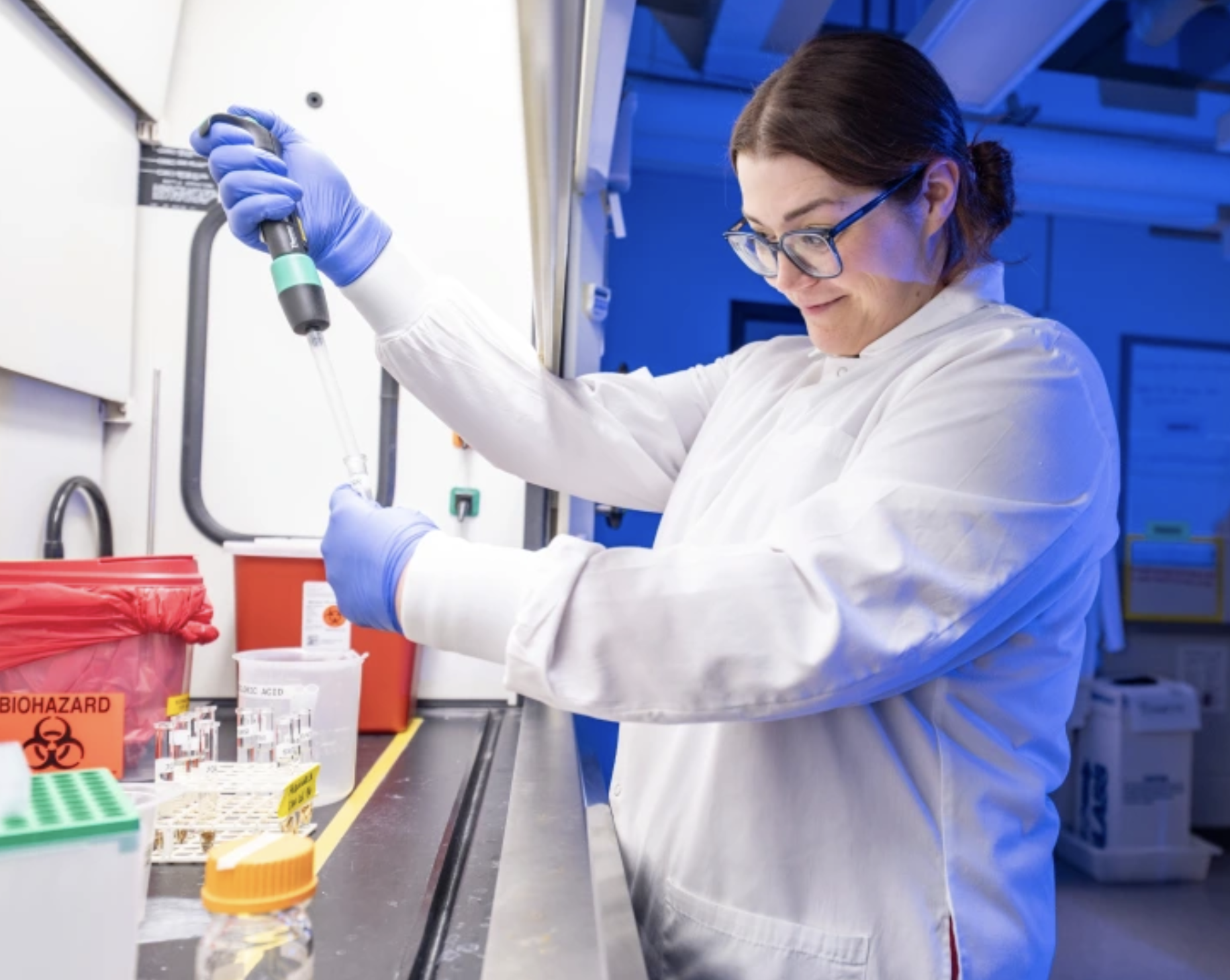
Dr. Angelina Locker pictured. Photo Source
What is Stable Isotope Analysis?
Stable isotope analysis involves measuring the amounts of certain elements, such as carbon and nitrogen, in bones and teeth. These elements come from the food and water people consumed throughout their lives. By analyzing these isotopes, we can infer details about the types of plants and animals in their diets. For example, carbon isotopes can reveal whether a person ate a diet rich in certain plants, like corn or beans, while nitrogen isotopes help us understand the sources of protein, such as fish or terrestrial animals.
Stable Isotope Analysis for Belén were conducted by Dr. Angelina Locker and lab members in the Bioarchaeology & Stable Isotope Research Lab (BSIRL) at Vanderbilt University, directed by Tiffiny Tung.
Diet
Research
We analyzed carbon and nitrogen isotopes in 62 bone samples and 32 tooth root samples from individuals buried at the Nuestra Señora de Belén cemetery. Carbon and nitrogen isotopes in bones and teeth reveal details about the plants and animals in a person’s diet. Carbon in bones reflects adult plant consumption, while enamel shows childhood diet. Nitrogen indicates protein sources like fish or deer.
Most individuals buried at Nuestra Señora de Belén ate a diet primarily consisting of C4 plants (like corn) and animals that fed on them (shown in the purple circle).
However, a few individuals consumed mostly C3 plants (such as beans and squash) and got their protein from C3 animals (orange circle), and another small group others ate a mix of C4 plants and fish or other aquatic animals (blue circle).
The results are very preliminary and we will continue updating this page as we learn more.
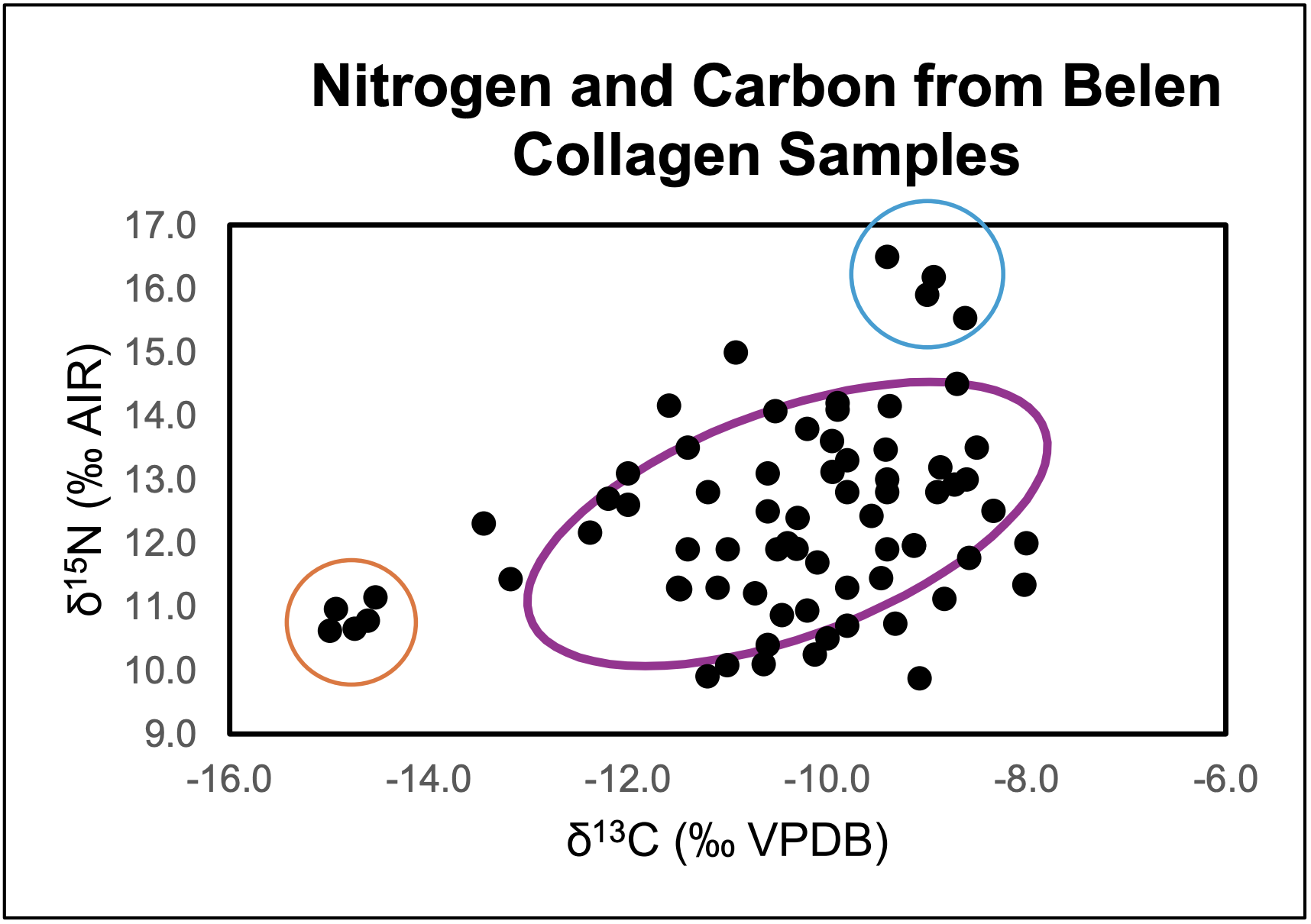
This figure plots carbon isotope values on the horizontal axis against nitrogen isotopic values on the vertical axis. Each dot represents one person from the burial population. Their positions on the plot correspond to differences in the kinds of carbon and nitrogen present in their teeth and skeletons, which helps us reconstruct dietary differences.
Movement + Mobility
Research
To study where people may have lived during their lives, we analyzed the oxygen isotopes in bones and teeth, using data from 61 bone samples and 81 tooth enamel samples. Because different sources of water across a landscape can have different oxygen signatures, oxygen from drinking water in our bodies reflects the region(s) we lived in. This can tell us about migration patterns. To figure out what local water looks like in Belén, we used data from 583 water samples collected around the area. Based on these results, we created a "local range" of oxygen values that would show up in someone’s body if they lived in Belén. If someone’s body has oxygen that differs from this range, we know they migrated to Belén from somewhere else and sometimes we are able to determine the regions they migrated from.
About 41% of the samples from the cemetery had oxygen signatures from outside of Belén, suggesting those individuals likely spent part of their lives somewhere else. 39% of bone samples and 43% of teeth were non-local—pointing to movement either during childhood, adulthood, or both. This means many of the people buried at Belén likely came from somewhere else—or spent part of their lives outside the area. While it's difficult to pinpoint exact places of origin, these chemical clues suggest that some of these individuals may have come from Mexico, Spain/Portugal, Canada/Montana, and Africa, reflecting various kinds of free and forced movements into Belén.
The results are very preliminary and we will continue updating this page as we learn more.
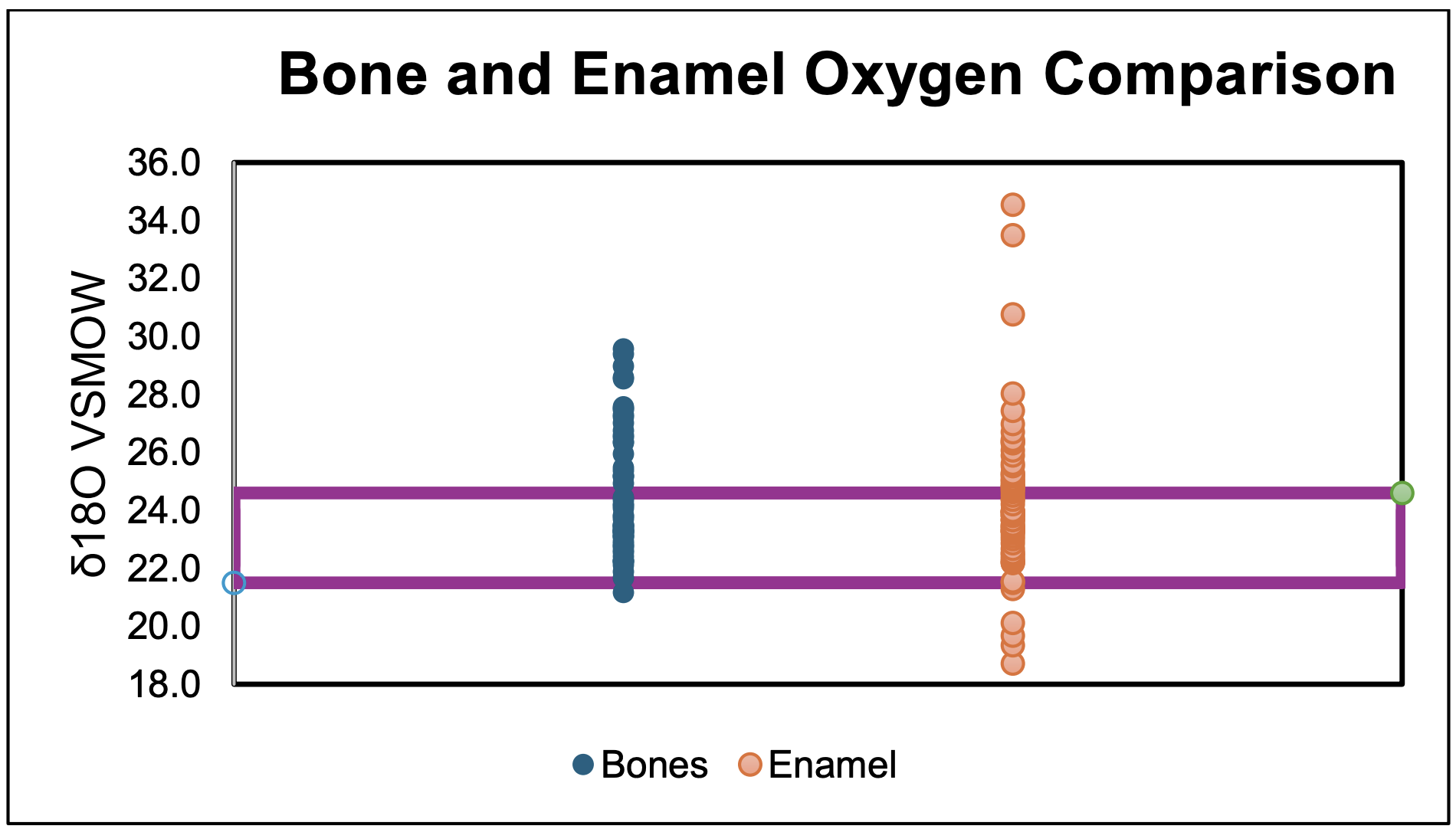
This figure plots the oxygen isotope values of the bone and tooth enamel samples. The purple rectangle refers to the “local" range of oxygen values determined from water samples.