Ancestral & Descendant DNA
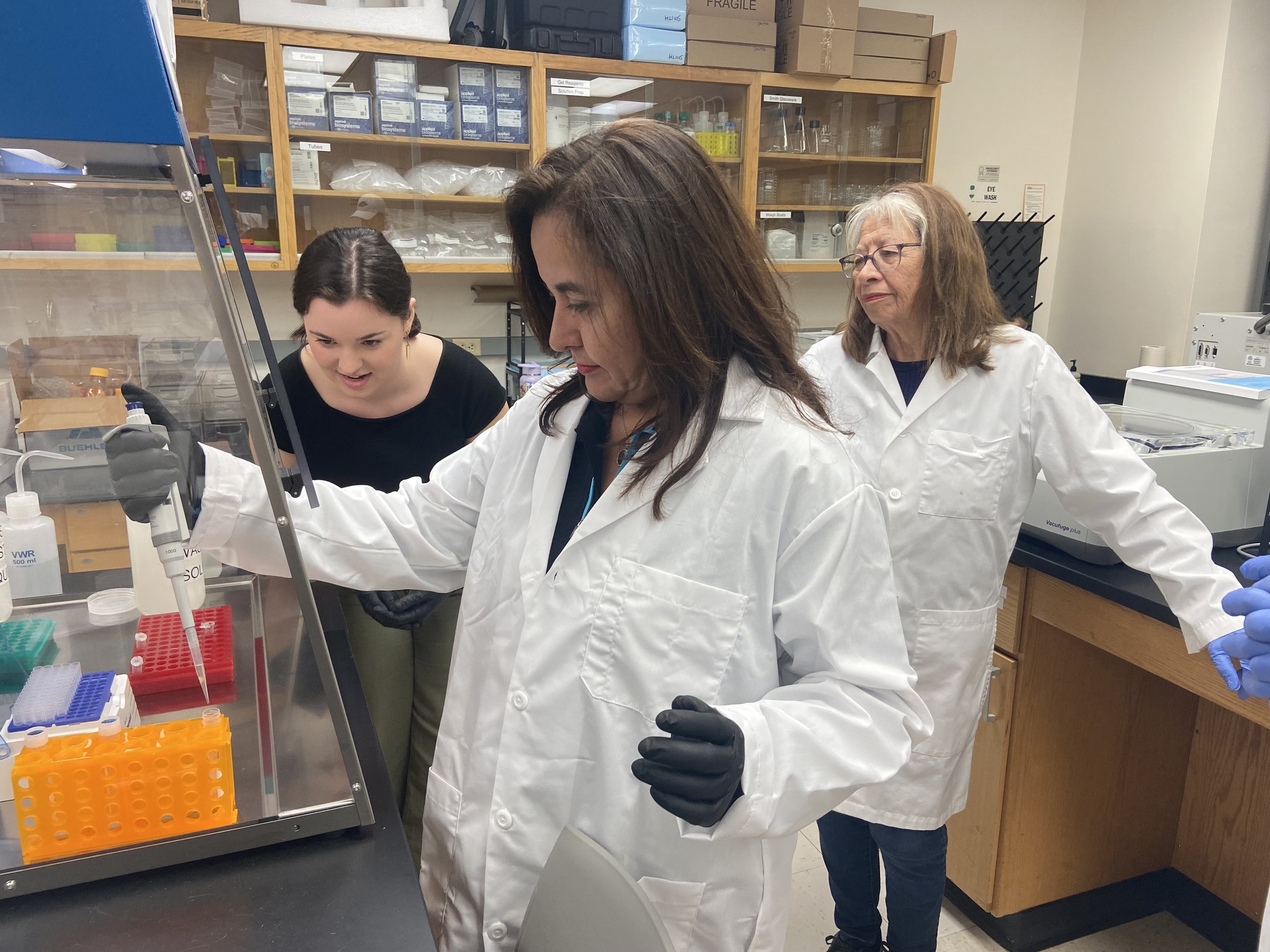
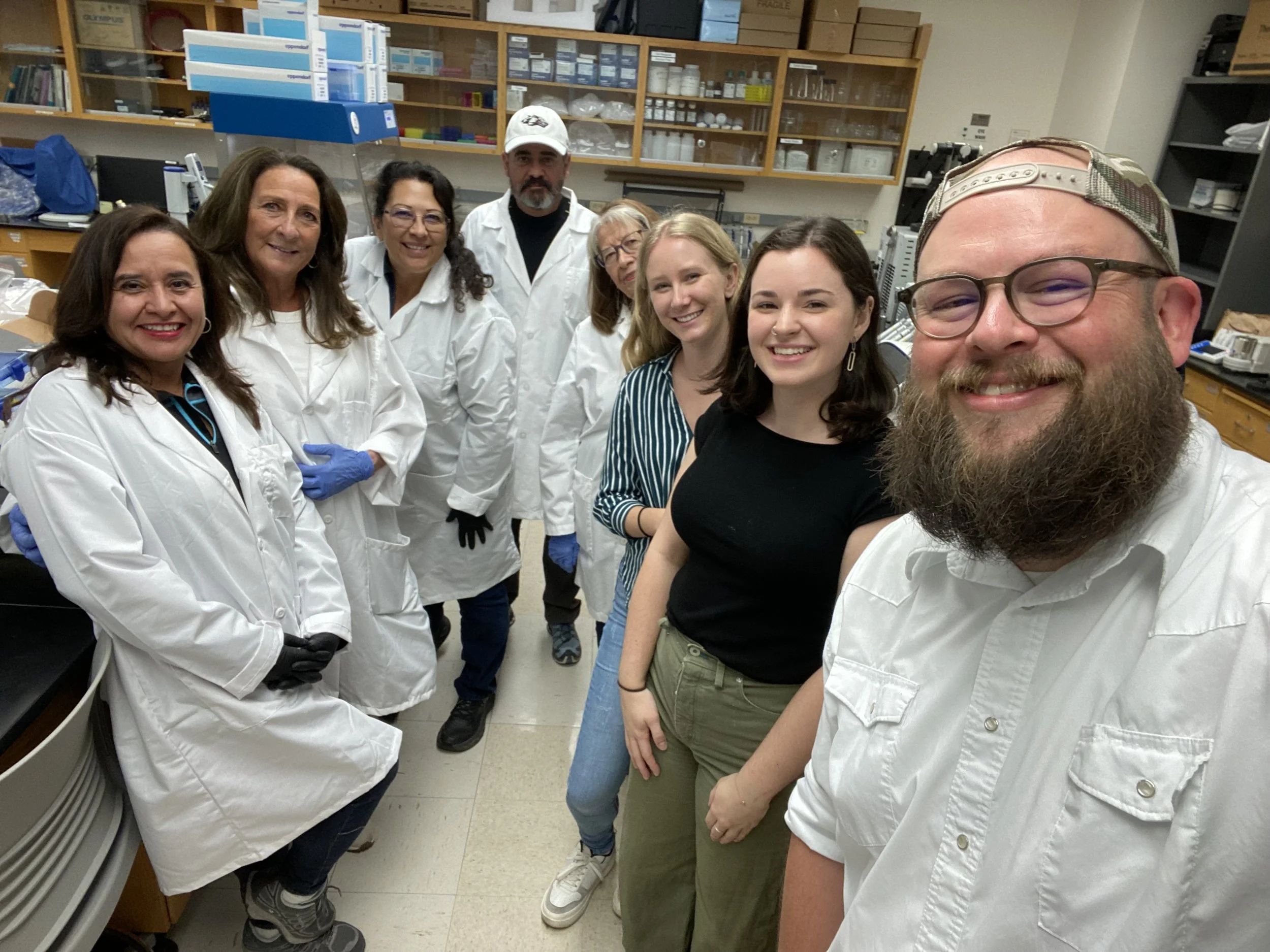
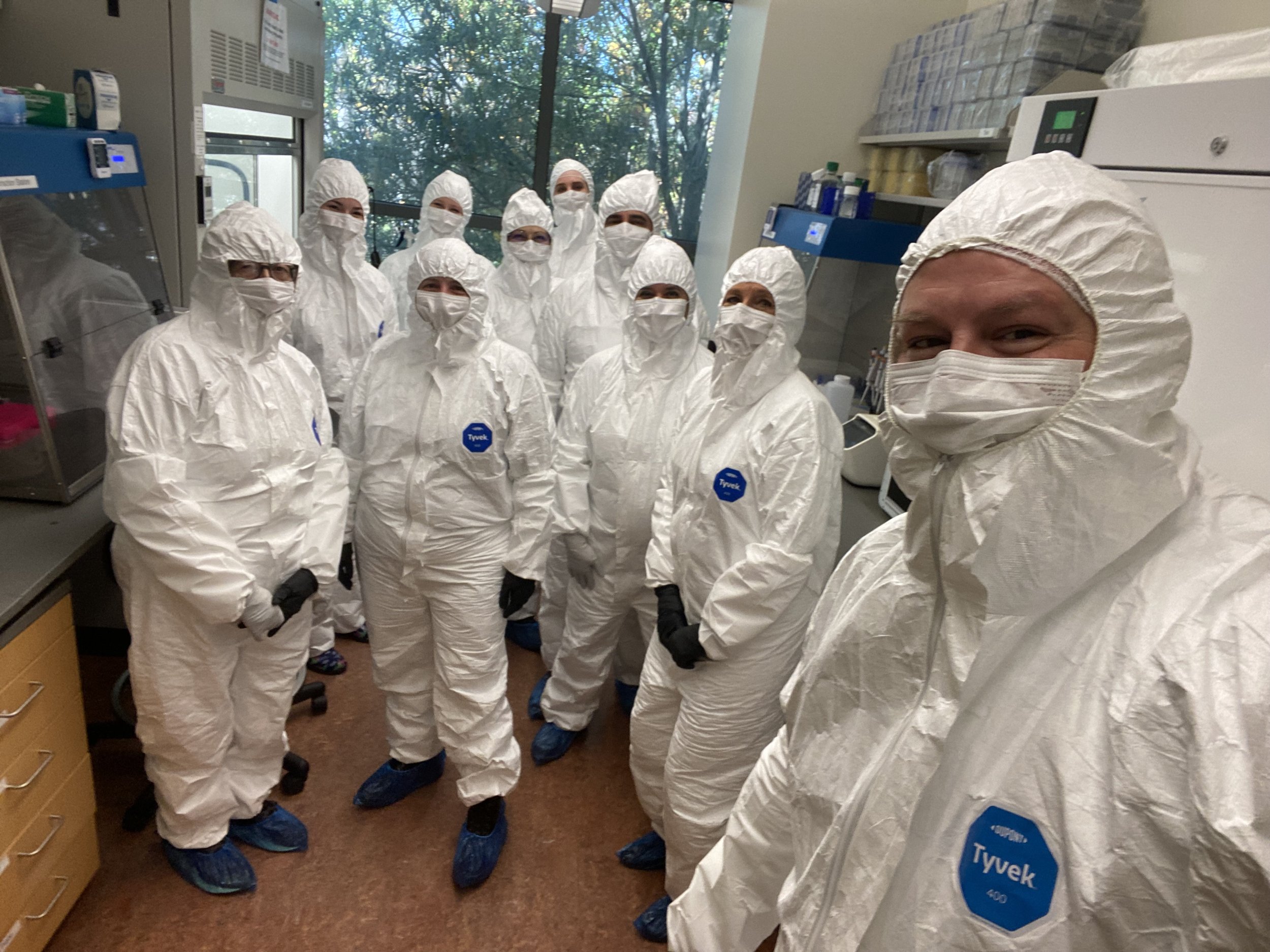
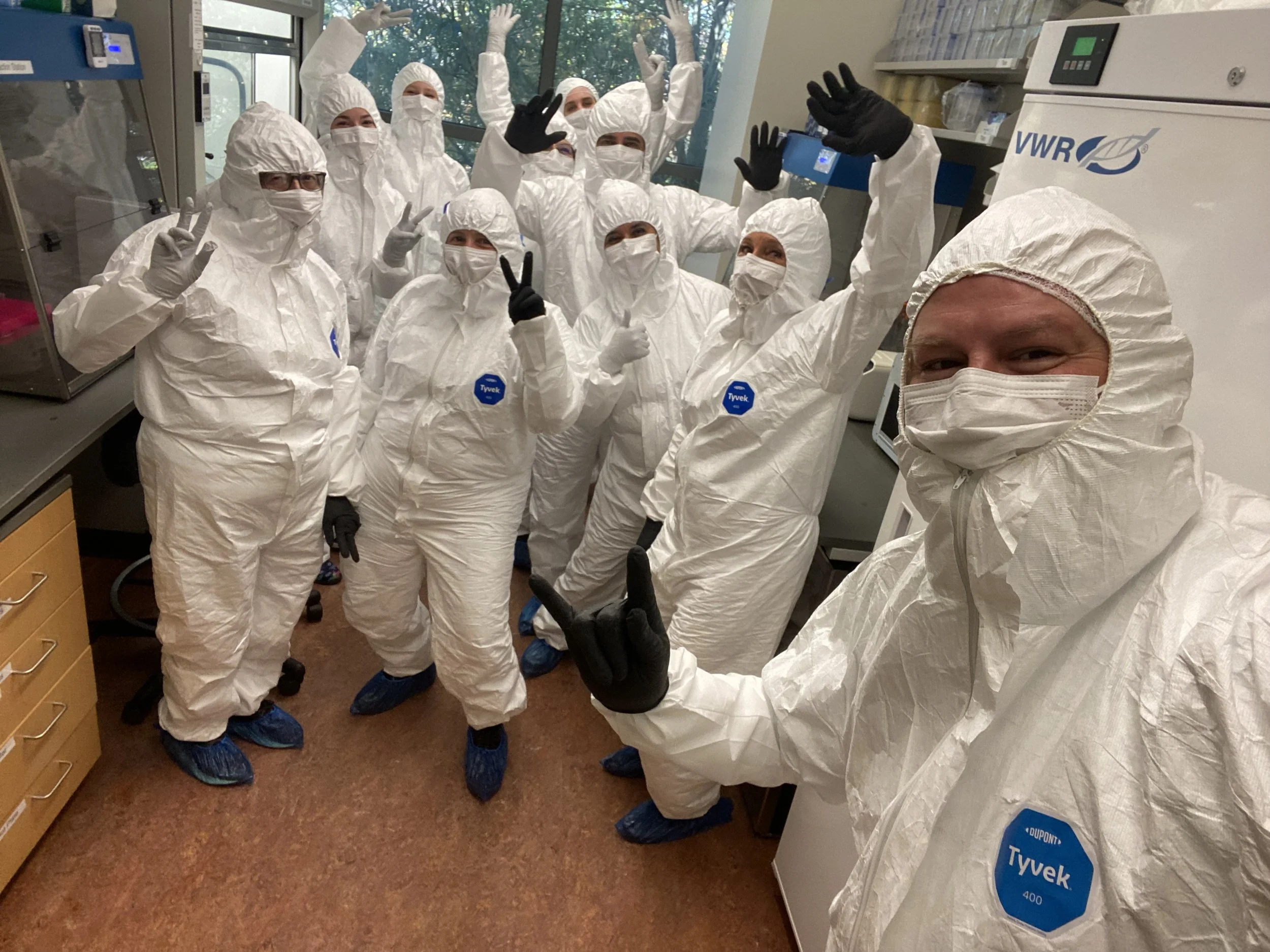
Photos from Novemeber 2024 visit to Dr. Smith’s ancient and contemporary DNA labs at George Mason University.
One of the primary goals of this project is to use ancient DNA from those buried in the original church to learn more about the early population history of the town. Dr. Rick Smith and his team selected small samples of teeth and bone (N=117), many of which which contain preserved fragments of DNA. We work with these samples in a state-of-the-art cleanroom facility designed specifically for working with highly fragmented DNA. We are also obtaining and analyzing DNA from 54 living descendants of those interred in the original Nuestra Señora de Belén church. This research will provide insights into the early population history of the town and deepen the connection between the descendant community and their ancestral past.
This work requires careful, highly specialized, and time-consuming laboratory procedures that have been ongoing since 2024 and will continue over the next several years. Unlike commercially available genetic tests such as those available from 23andMe and Ancestry.com, which primarily compare your DNA to other living people around the world, the Belén Population History Project will compare and analyze the relationships between the burial population in Belén and many of their living descendants.
Ancestral DNA
Current Progress
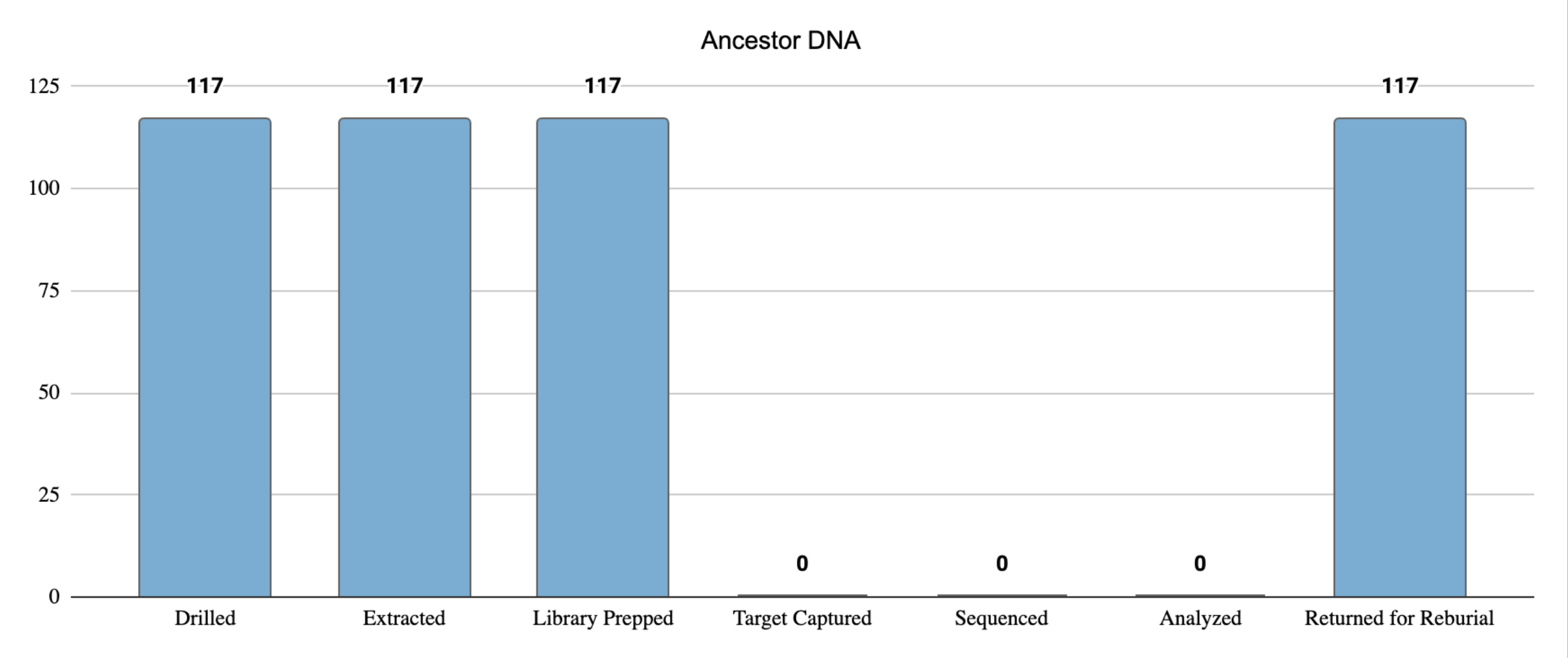
To study the Belén Ancestors, we carefully selected 117 teeth and bones from the church burials. These samples were used for both DNA and isotope analysis, with the smallest amount possible (no more than 200 milligrams) taken for analysis. Obtaining ancient DNA from historic teeth and bones is a delicate and time-consuming process that must be done in a special ultraclean lab at George Mason University. This research is conducted with great care and respect for the Ancestors we work with.
DNA has been extracted from all 117 samples and we are currently analyzing its preservation and quality for further analysis. DNA libraries—a step that prepares the genetic material for sequencing—have been built for all of those DNA extractions. In the coming months, researchers will separate the small amounts of human DNA from other DNA (like bacteria from the burial environment) using a process called "Target Capture." This target capture technique was also used on the DNA from the living participants so that both groups can be directly compared. Once that’s done, all the DNA will be sequenced, and researchers will begin analyzing the genomic data. Ancient DNA is highly fragmented and preservation is variable, and not every individual tested will have preserved DNA.
Updated April 28, 2025
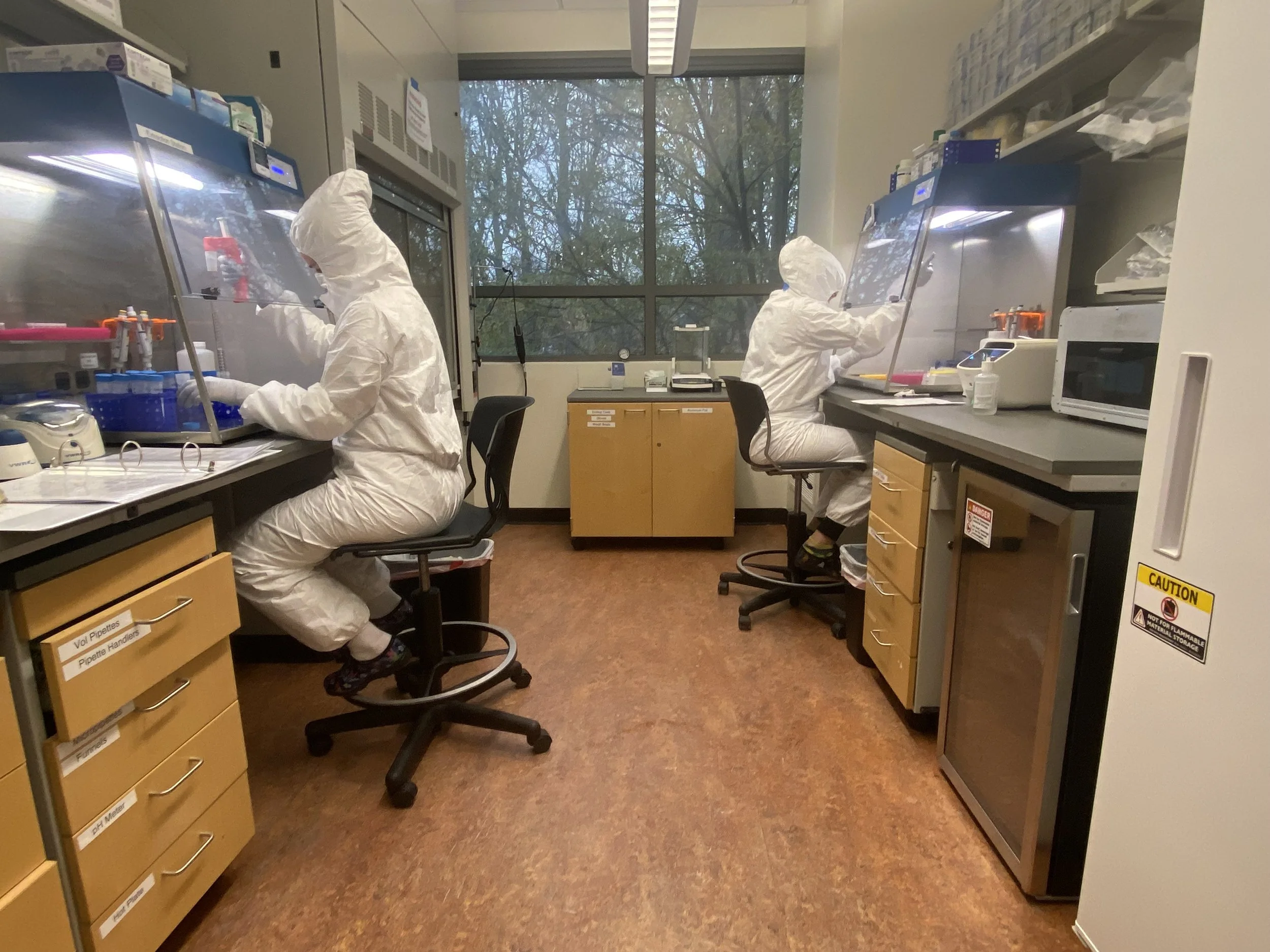
Image Description: Graduate student researchers, Kate Gruber and Gréta Kühne, are pictured working in the GMU ancient DNA lab. On the left, Kate is working on DNA extraction, and on the right, Gréta is working on preparing libraries. The lab is an ultraclean room for working with Ancestor’s DNA. Researchers must wear full-body suits and clean frequently to eliminate contamination, as the DNA is so fragile. The lab has ultrafiltration systems for cleaning the air and overhead UV irradiating lights for destroying any contaminating DNA in the air. The lab is regularly chemically decontaminated to maintain an ultraclean environment.
Descendant DNA
Current Progress
We work with the DNA samples from living descendants in a separate, contemporary DNA lab at George Mason University, equipped for analyzing non-degraded DNA.
So far, 54 living descendants have participated in the study by providing DNA samples. All lab work and DNA sequencing for these participants is finished, and researchers are now analyzing the data. We will produce individual reports for all participants who sent us a sample. The first set of reports, which will share each person’s full mitochondrial genome, will be sent out this year. A second report will come after the DNA work on the Belén Ancestors is complete, and will estimate how genetically connected the living descendants are to the ancestors buried in the cemetery.
Because many generations have passed and only a small number of burials were recovered, it’s unlikely that we will be able to identify direct family relationships. Instead, the goal is to understand general patterns of genetic relatedness between the descendant community and the people buried in Belén as a whole.
Mitochondrial lineages (a small piece of DNA inherited from the mother) have already been analyzed and the preliminary results of that analysis are shown in the pie chart, with further analyses pending.
The pie chart shows the different mitochondrial DNA (mtDNA) lineages from all the descendants who participated in this study so far. Each slice of the pie chart represents a different mtDNA lineage. The size of each slice reflects how many individuals in the study share that maternal lineage. Several different maternal lineages are present in the group. The largest group of participants share a lineage called A2h1, which is one branch of the broader A2 haplogroup that is commonly found among Indigenous peoples in the Americas and many of their Indigenous and non-Indigenous descendants. Other lineages in the sample include various subbranches of haplogroups B2, C, and X2, which are also widely observed among peoples of Indigenous descent.
A smaller number of participants carry lineages belonging to haplogroups such as H, HV, and V, which are commonly found European maternal lineages. Overall, the results show that participants in this project represent many different maternal family lines, resulting from the ancient and recent population histories of Belén and the surrounding regions.
Note: These results are preliminary, and we will be working in the coming months and years to reconstruct the population history of Belén in greater detail.
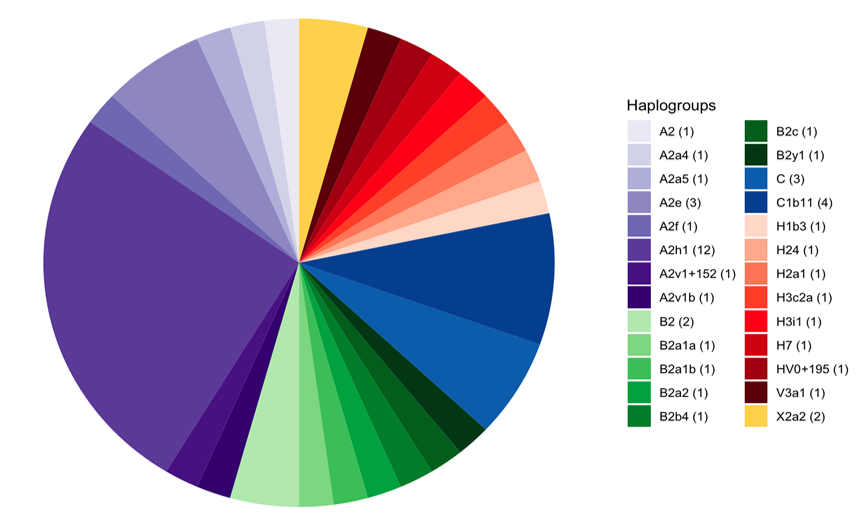
Figure: mtDNA results from all living Belén descendants as a group.
Page Last Updated: April 28, 2025