About the Project
The Belén Population History Project (BPHP) is being conducted by Dr. Rick W. A. Smith (George Mason University) and Dr. Angelina Locker (Vanderbilt University) on behalf of the families, community, and descendants of the early peoples of Belén, NM.
The goals of our portion of the work are to help recover the diet, movements, and genetic history of early Belén and characterize the genetic relationships between the cemetery population and their living relatives. This work requires careful, specialized, and time-consuming laboratory procedures that have been ongoing and will continue over the next few years.
This website primarily focuses on the work conducted by Dr. Smith and Dr. Locker, and their collaborators and lab members. As a result, information about other aspects of the project, such as the genealogy and bioarchaeology, will be provided through links in the “Resources” section below.
Funding: The project is currently being funded through Dr. Smith’s individual research funds provided by George Mason University. Some of our previous community-engagement activities were funded by the National Science Foundation (NSF) through a supplemental award to Dr. Smith through Drs. Martin and Stone’s NSF Award #2341371. Funding for that grant was discontinued in 2025. While the current funding landscape has changed dramatically and presents new challenges, we are committed to this project and continue to make significant progress on this work.
Brief Project History & Timeline
In close collaboration with local families, descendants, and historians, archaeological work was conducted in Belén between 2019-2023 at what was once the town’s Plaza Vieja. Excavations were undertaken at the place memorialized by descendants as the site of the original Nuestra Señora de Belén church. Known as the “Historic Belén Bioarchaeology Project”, the goals of the project were to recover individuals from the cemetery whose remains were becoming vulnerable to loss, to safely relocate them to the new church cemetery, and to find the walls of the original mission church. The recovery effort was conducted by Dr. Debra Martin, Dr. Pamela Stone, and Dr. Claira Ralston, guided by Samuel Sisneros’s historical knowledge, and informed by the memories, stories, and knowledge of the O’Neal and Torres families and many other descendants who shared their stories.
In October 2022, Dr. Rick Smith was invited to visit Belén by the bioarchaeological team and community members to discuss how genetics and isotopes might be used to learn more about the burials they were recovering from the original Nuestra Señora de Belén church. With the approval from community members and the New Mexico Office of Archaeological Studies, Rick and his team began sampling small pieces of teeth and bone from the recovered burials for DNA and isotopic analysis. In combination with community memory, historical research, and archaeological contexts, the DNA can help us to better understand the relationships and population history of Belén, while the isotopes can help us to better understand the diets and movements of people into the community over time.
In mid-2023, in collaboration with our community partners and with approval from the George Mason University Institutional Review Board, Rick and his team began inviting descendants to participate in the project by submitting saliva samples for genetic analysis, which will be compared to the DNA recovered from those buried at the Nuestra Señora de Belén church.
Community-Collaboration
At the heart of this work is an ongoing commitment to collaboration with the descendants of those buried at the original Nuestra Señora de Belén church. From the beginning, this project has been shaped by the insights, questions, and priorities of community members, who have actively participated in shaping the direction of the research and will shape the interpretation of its findings as the work moves forward over the next few years.
We gratefully acknowledge the individuals and groups who have made this project possible, especially the families and descendants who have shared their time, knowledge, and trust.
Note: we are working to provide a timeline of past and future community events, including meetings with the community in Belén and Washington, D.C., and details about the reburial ceremony last year.
Resources
Want to learn more? reference the following resources for more information about Belén and community friends of the project. Links provided when available. these lists are not exhaustive.
Books by Descendants and Collaborators:
Veiled Visions of Past and Present Thought, by Alberta O’Neal
The Plaza Vieja and Colonial Church of Nuestra Señora de Belén, New Mexico, by Samuel E. Sisneros
Genealogy and Genetic Genealogy:
New Mexico Genealogical Society
Digital Archive of Indigenous Slavery:
Selected Literatures:
Note: we will continue adding resources to this list as the website is developed
Avery, Doris Swann. 2008. “Into the Den of Evils: The Genizaros in Colonial New Mexico.” University of Montana.
Ebright, Malcolm. 2014. Advocates for the Oppressed : Hispanos, Indians, Genízaros, and Their Land in New Mexico. Albuquerque: University of New Mexico Press.
Gallegos, Bernardo. 2017a. “‘Confess This Genízaro so That They May Give Him Five Bullets’ – Slavery, Hybridity, Agency, and Indigenous Identity in New Mexico.” In . Vol. 9. United States: BRILL.
Gallegos, Bernardo. 2017b. Postcolonial Indigenous Performances Coyote Musings on Genízaros, Hybridity, Education, and Slavery. 1st ed. 2017. Breakthroughs in the Sociology of Education. Rotterdam: SensePublishers.
Gonzales, Moises, and Enrique Lamadrid, eds. 2019. Nación Genízara: Ethnogenesis, Place, and Identity in New Mexico. Quercencias Series. University of New Mexico Press.
Horvath, Steven Michael. 1979. “The Social and Political Organization of the Genízaros of Plaza de Nuestra Señora de Los Delores De Belén, New Mexico 1740-1812.” ProQuest Dissertations Publishing.
McCleary, Alexandra. 2020. “Lived Experience in New Mexico, 1754-2019: A Historical Archaeology With and For a Genizaro Community.” eScholarship, University of California.
McDonald, Margaret Espinosa. 1997. “‘Vamos Todos a Belen’: Cultural Transformations of the Hispanic Community in the Rio Abajo Community of Belen, New Mexico from 1850-1950.” Ph.D., United States -- New Mexico: The University of New Mexico.
Piatt, Bill, and Moises Gonzales. 2019. Slavery in the Southwest: Genízaro Identity, Dignity and the Law. Durham, North Carolina: Carolina Academic Press.
Sisneros, Samuel E. 2016. “Belén’s Plaza Vieja and Colonial Church Site: Memory, Continuity and Recovery.” University of New Mexico.
Sisneros, Samuel E. 2017. "Los Genízaros and the Colonial Mission Pueblo of Belén, New Mexico." New Mexico Historical Review 92, 4.
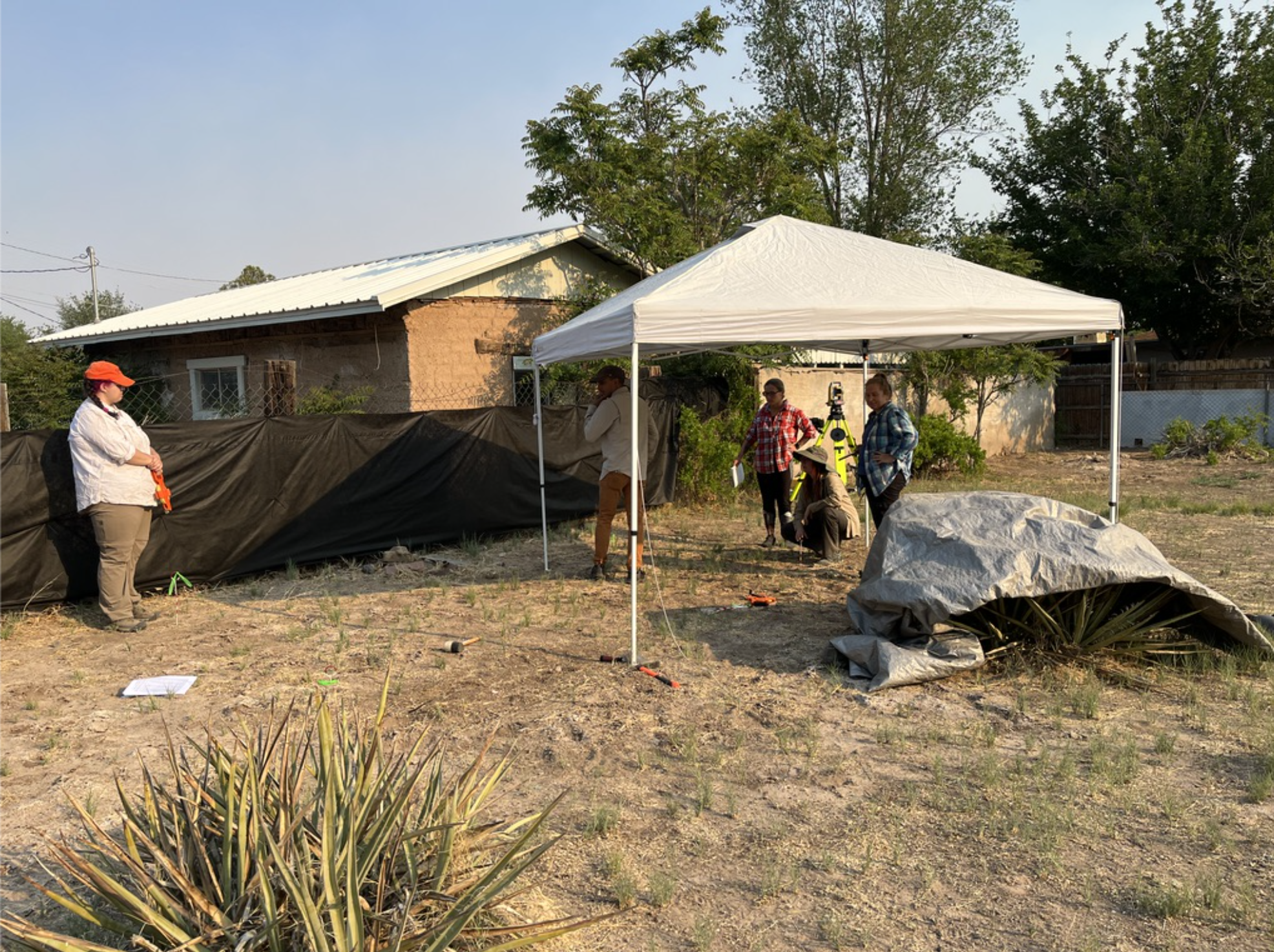
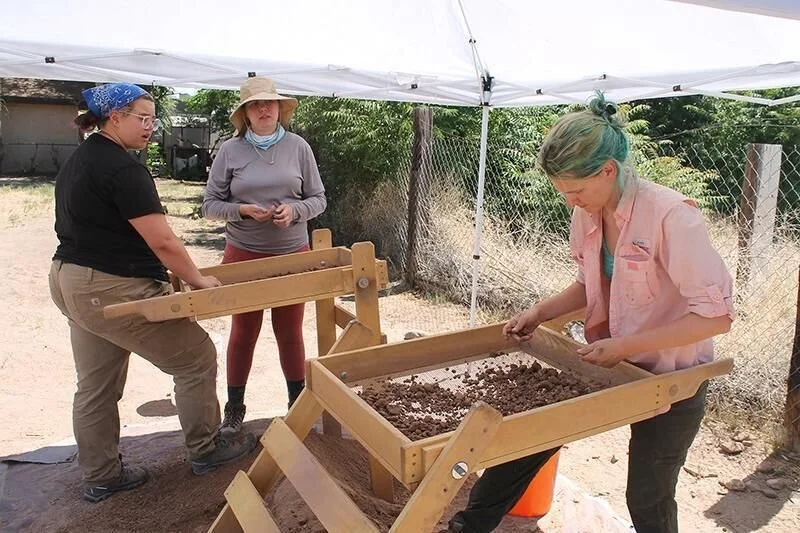
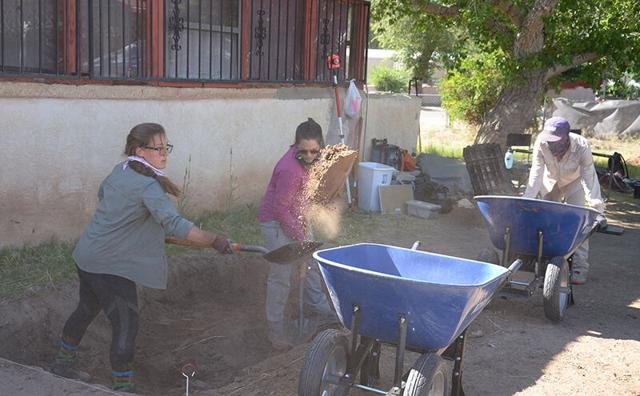
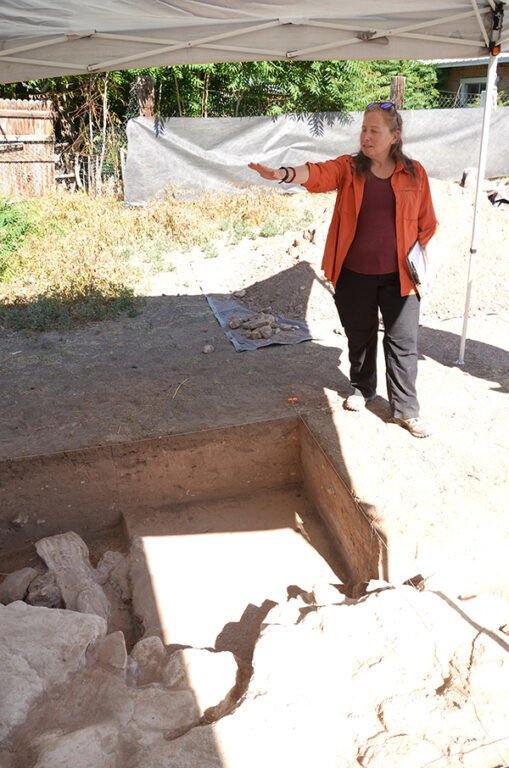
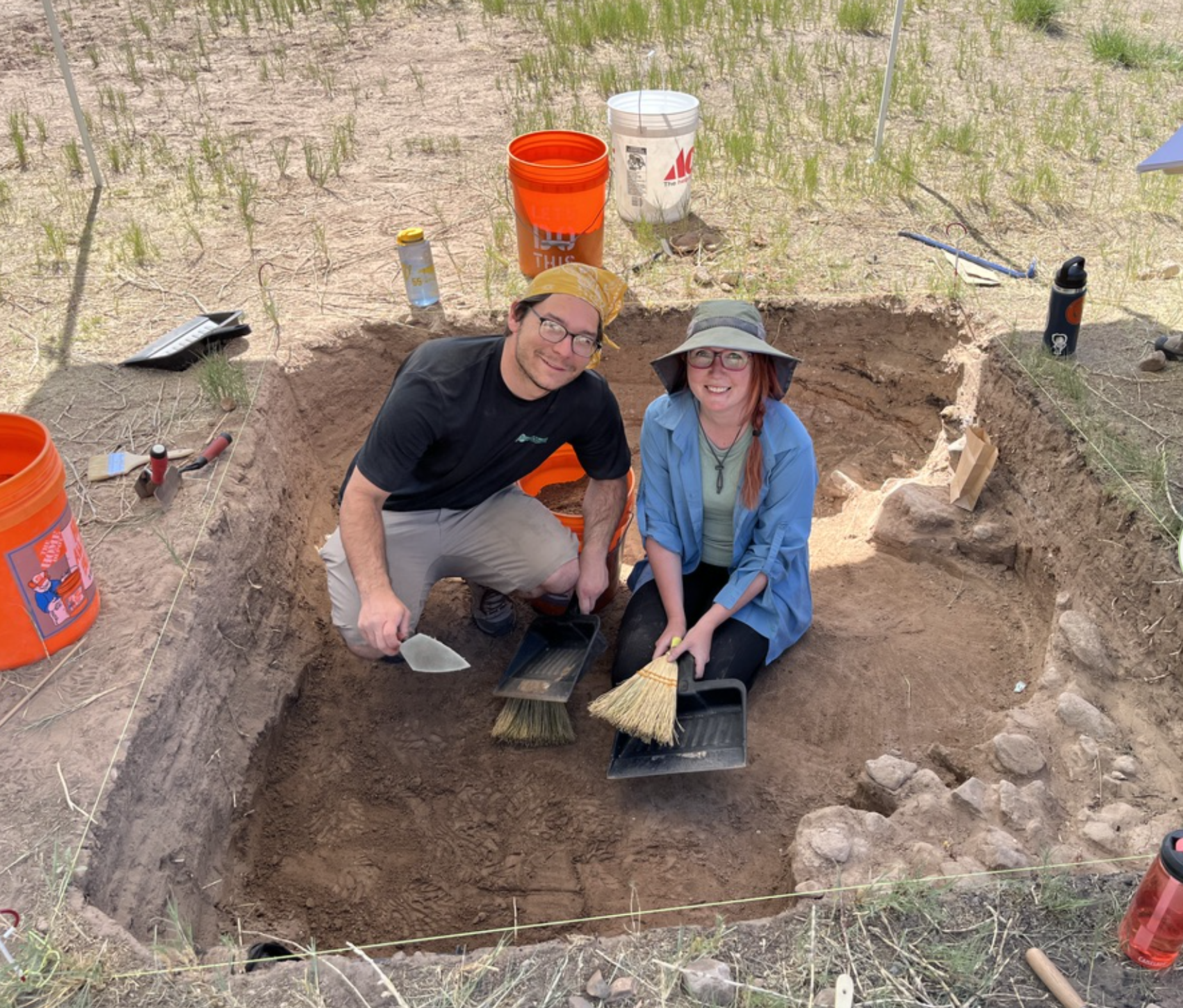
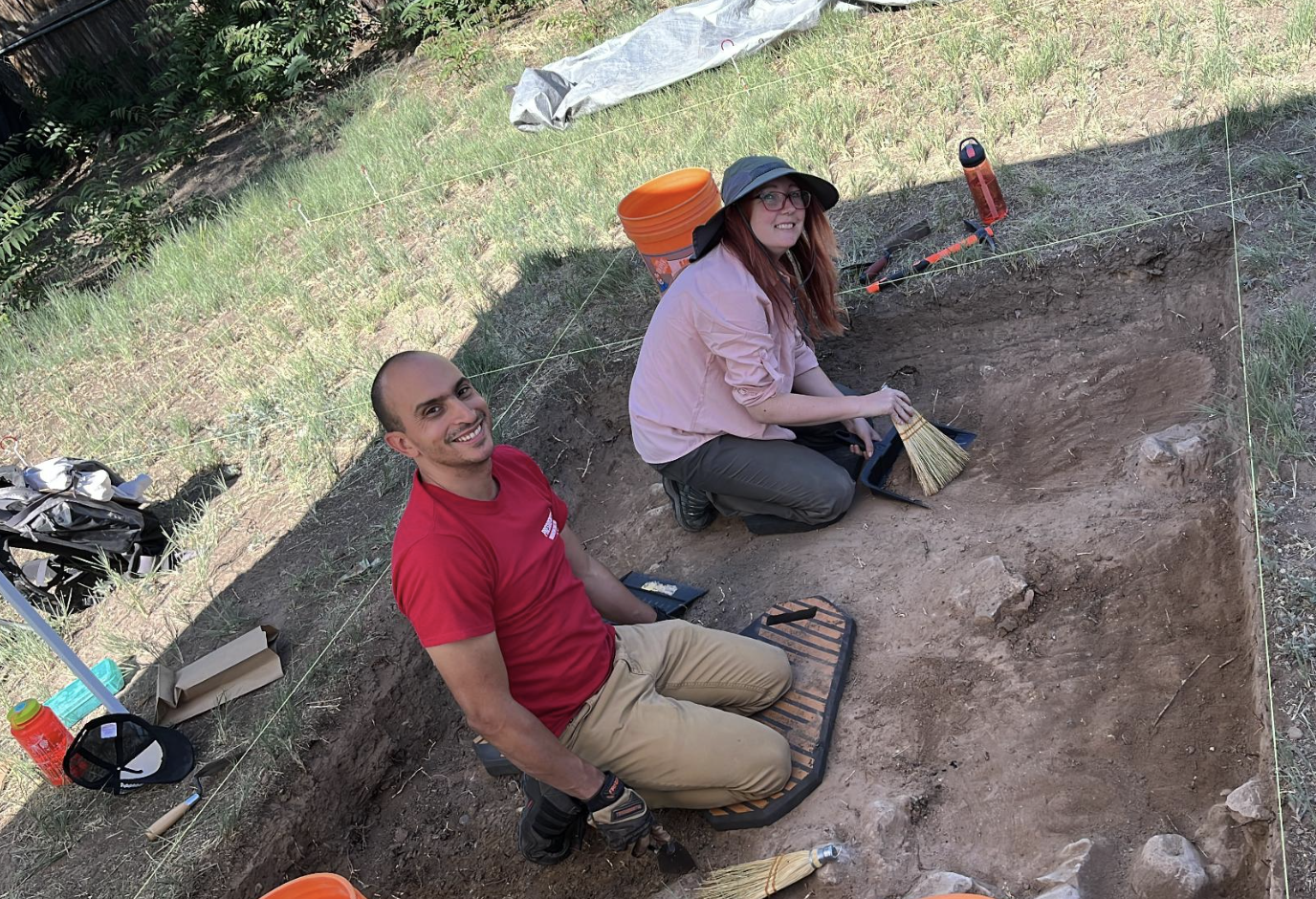
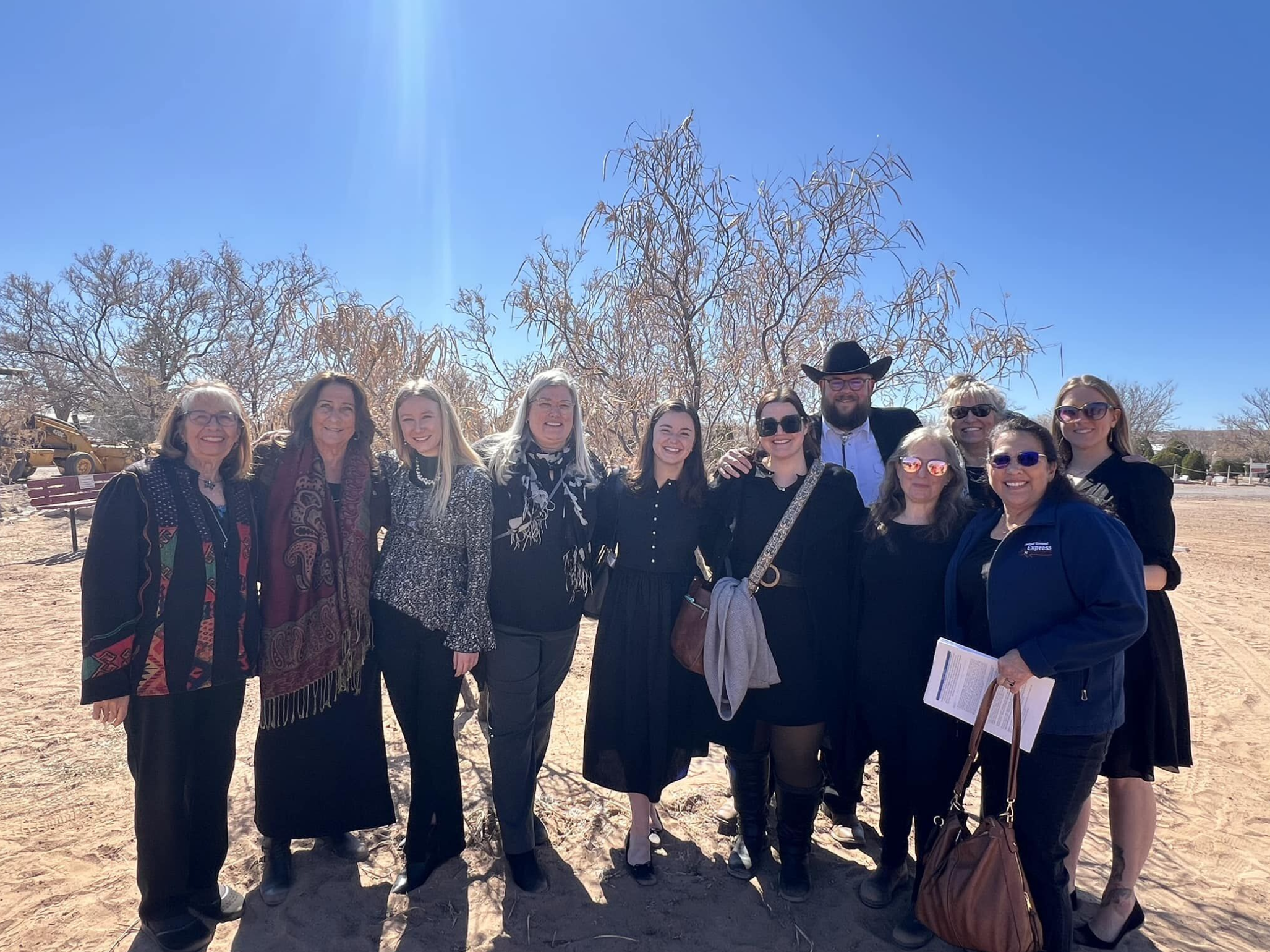
Photo of Belén descendants and project researchers after the reburial ceremony of the ancestors on February 21, 2025.
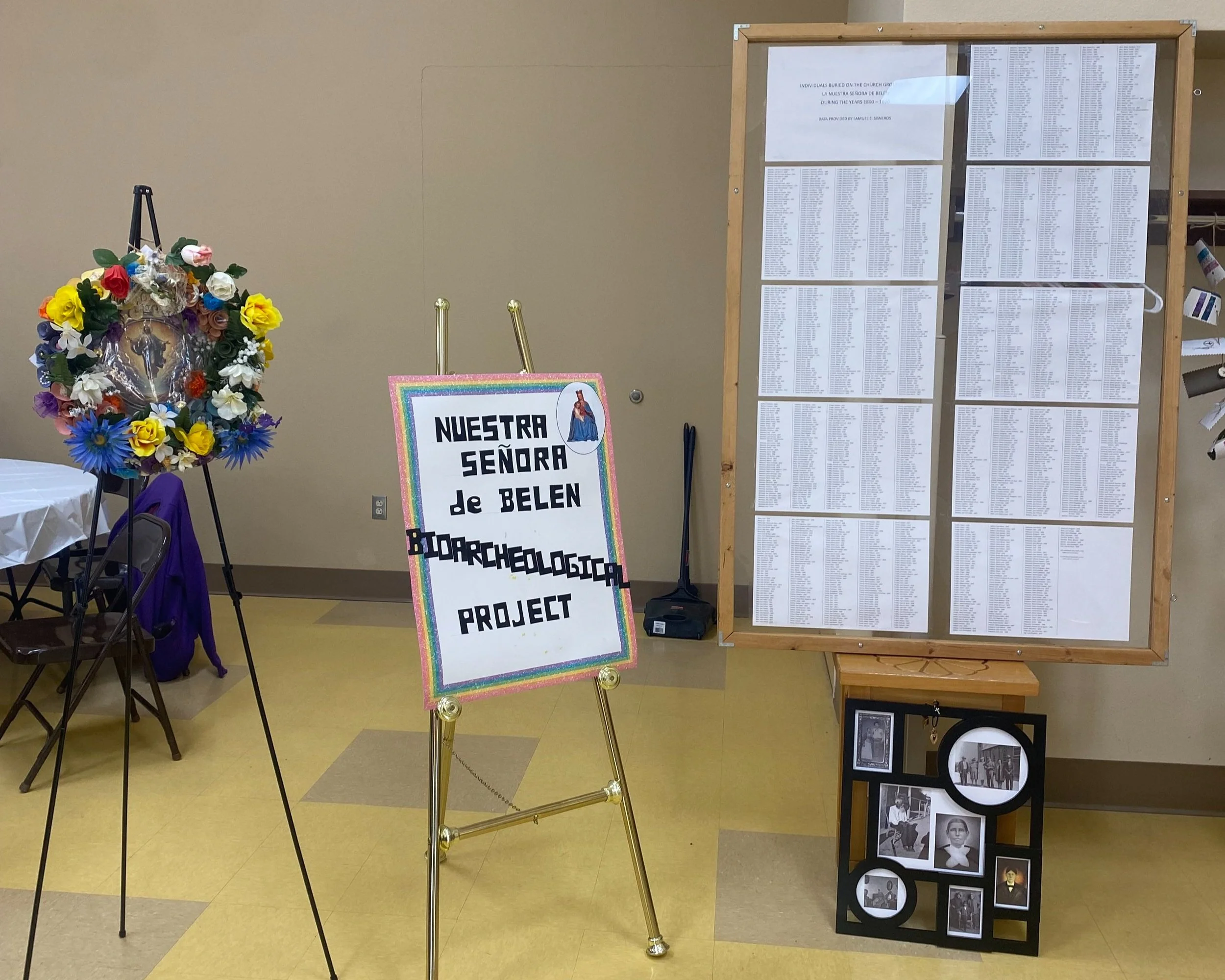
Photo of the entrance sign and list of all interred persons in the historic Nuestra Senora de Belen cemetery, researched and compiled by Samuel Sisneros. 2/21/2025